
° Home page
° About VE
° Last issues
° AMITRAIN shop
° Subscription
° Back issues
° Agenda
° Photos gallery
° Links
° VE Files



AMITRAIN shop
Voie Etroite binder
Out of order...
Books and DVD
To ensure best prices, our books are stored in limited quantity.
Please contact us to check the availibility.
Last update : 27/01/2025.
 |
 |
 |
 |
 |
| French books | English books | German books | Swiss books | DVD |
| Title | Price |
|---|---|---|
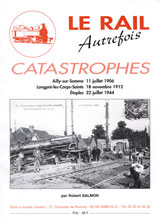 |
Le Rail Autrefois - Catastrophes Some railways accidents at Ailly-sur-Somme on 11th July 1906, at Longpré-les-Corps-Saints on 18th November 1912 and at Étaples on 22d July 1944. Lots of old postcards. 21 x 29,7 cm size, 16 pages, B&W. |
5,30 Euros |
Complete list of available series (French and others) (PDF)
Minors french railways series available :
Title Price
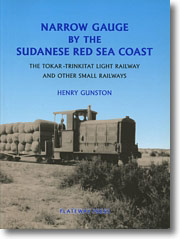
Narrow Gauge by the Sudanese Red Sea Coast
A remarkable collection of photographs and notes by members of the Ellis family form the core of this book, in addition to further research by the author and writings and photographs from former Sudan railwaymen.
This book charts the history of in particular, two railways from Trinkitat, the first an 18in gauge line which ran to water wells at El Tib, built in 1896 under Egyptian military supervision, later abandoned and the Tokar-Trinkitat Light Railway, a 600mm gauge line primarily used for the export of the cotton crop from Tokar, built in 1921/22 by contractors, using ex-War Department Light Railways rolling stock and Simplex locomotives, effectively absorbed by Sudan Railways in 1993 and closed in 1952.
18x24 cm size, Softback, laminated cover, 80 pages, 30 black and white photographs, 5 maps.18 Euros
Title Price
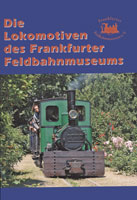
Die Lokomotiven des Frankfurter Feldbahnmuseum
Collection guide of Francfort museum. A lots of locomotives, diesel engine. Technical data, history and picture of each vehicle.
Colour. 14,5x20,5 cm size, 64 pages. In german.7,50 Euros

Die Feldbahnen der Bong'schen Mahlwerke
Very interesting book about a big quarry narrow gauge railway in germany with roundhouse, workshop, etc. Maps, history, sotcklist, etc.
Lots of B&W and colour pictures. Hardback.
21x30 cm size, 240 pages.47,90 Euros
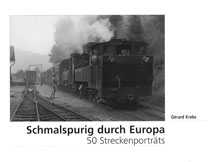
Schmalspurig durch Europa
B&W very nice picture of narrow gauge railway in more than 20 countries in the last 40 years.
Lots of pictures, B&W, in german.
30x21,5 cm size, 112 pages, hardback.19,50 Euros

BVA photos series
Each series contain from 10 to 13 B&W quality postcards.
French railways series : 7,00 Euros Franco each series
Out of France railways series : 5,00 Euros Franco each series
|
|
For a faster order, please send your items list by e-mail to the secretary. Your order will be posted as soon as we received your payment.
Payment with the order, by credit card (Card number, Name on card, expiry date and security number : 3 last digits on the back of the card) or a cheque on a french bank. No cash with order. No payment by return.
Sale conditions
Price included P&P, except for postcards and Voie Etroite review (see sale conditions).
Foreigner : Credit card (Card number, Name on card, expiry date and security number : 3 last digits on the back of the card), bank payment. Foreign money cheque : NOT ACCEPTED. Usual delay of response to reception of the command : 8 to 10 days.
VOIE ETROITE - APPEVA
BP 70106, 80001 AMIENS CEDEX 1, FRANCE
Phone / Fax: (+33) 03 22 84 44 96
E-Mail : appeva@club-internet.fr